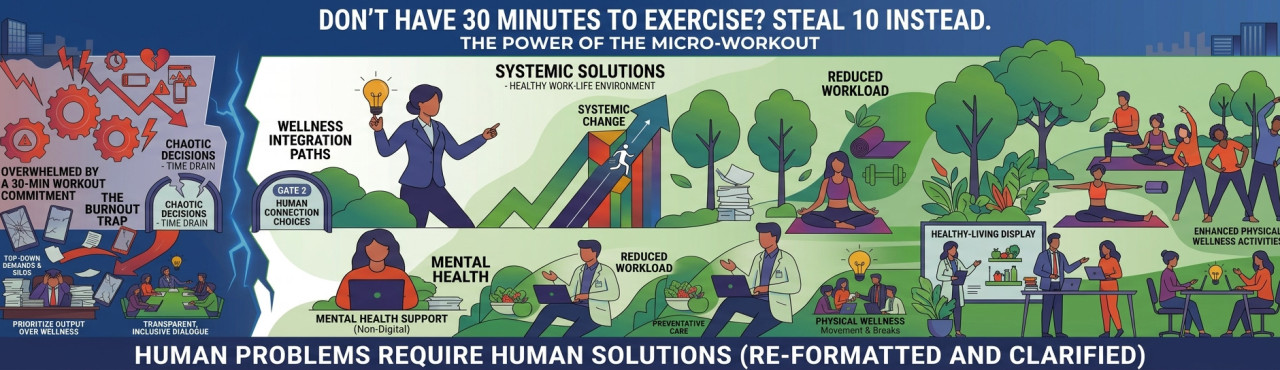
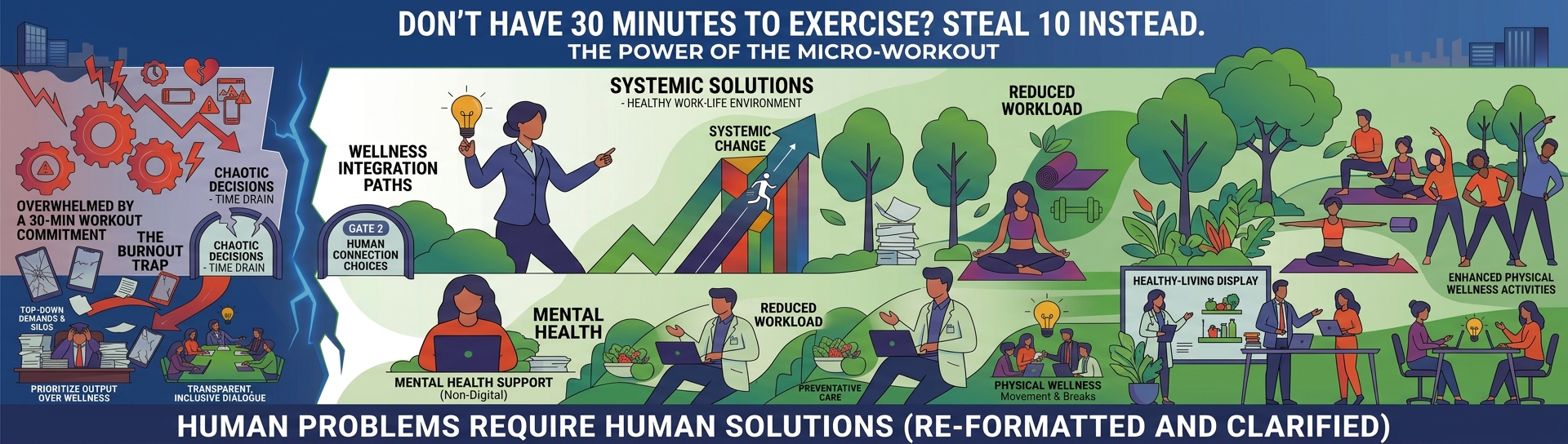

Don’t Have 30 Minutes to Exercise? Steal 10 Instead
How Busy Professionals Can Get Fit With Short Workouts and Simple Daily Movement
Think you need 30, 45, or even 60 minutes to get a worthwhile workout?
Think again.
If your schedule is packed with meetings, deadlines, family responsibilities, and everything else life throws at you, finding time to exercise can feel almost impossible.
You might start the day with good intentions, only to watch your workout disappear when something unexpected comes up.
Here's a different approach: Stop waiting for 30 minutes. Start with 10.
Take a 5-minute walk in the morning. Do 10 squats between meetings. Walk for another 5 minutes after lunch.
You've just created more opportunities to move without rearranging your entire day.
As someone who has spent more than 30 years in the fitness industry, I've found that helping busy professionals make exercise fit their lifestyles is often more practical than asking them to make their lifestyles fit exercise.
The key is simple: Consistency beats complexity.
Why Short Workouts Make Sense for Busy Professionals
One of the biggest obstacles to regular exercise is the belief that it has to take a lot of time.
Many people assume that unless they can complete a full workout, there's little point in exercising at all.
That all-or-nothing mindset can make it harder to establish a consistent routine.
But exercise doesn't have to happen all at once. Short bouts of physical activity throughout the day can contribute to your overall activity level.
For busy professionals, shorter workouts and movement breaks offer several practical advantages:
- Less time commitment: You can fit short sessions into breaks between responsibilities.
- More flexibility: You can divide your movement throughout the day.
- Fewer scheduling conflicts: A 5- or 10-minute session may be easier to fit into a busy calendar.
- A manageable starting point: Short sessions can help you build confidence and establish a routine.
- More opportunities to move: You don't have to wait until your next scheduled workout.
The goal isn't to replace every structured workout with 10 minutes of activity. It's to make movement a regular part of your life, even when time is limited.
The 10-Minute Fitness Strategy
Here's a simple way to start increasing your daily activity without adding a long workout to your schedule.
Instead of trying to find 30 uninterrupted minutes, divide your movement into smaller sessions.
Take a brisk walk around your neighborhood, office, or home. Start your day with some movement.
Perform 10 chair squats or another comfortable exercise to break up your sitting time.
Take a short walk after lunch to add more movement to your afternoon.
You don't need to follow this exact schedule. Move the activities around to fit your day.
The important thing is to find opportunities you can repeat consistently.
7 Simple Ways to Fit Exercise Into Your Lifestyle
You don't always need a formal workout to become more active. Your everyday routine may already offer plenty of opportunities.
Here are seven practical ways to make movement part of your day.
1. Take a 5-Minute Morning Walk
Before opening your email or getting caught up in the day's responsibilities, take a short walk.
You can walk around your neighborhood, through your office, or even inside your home.
If you have more time, keep going.
If you only have five minutes, that's fine, too.
A morning walk is a simple way to start building a daily movement habit without needing special equipment or a gym membership.
2. Do 10 Squats Between Meetings
Sitting through back-to-back meetings can make it difficult to find time for exercise.
Try using the time between meetings to perform 10 bodyweight squats.
Stand with your feet about shoulder-width apart. Bend your knees and hips to lower yourself comfortably, then stand back up.
If needed, use a chair for support or perform sit-to-stands instead.
You can also substitute wall push-ups or calf raises.
The objective is to interrupt long periods of sitting and incorporate a little more movement into your workday.
3. Walk During Phone Calls
Do you spend a lot of time on the phone?
If you don't need to be at your desk, use that time to walk.
You can pace around your office, walk through the hallway, or step outside.
Even a few minutes of walking during calls can help you accumulate more daily activity.
It's a simple example of combining exercise with something you're already doing.
4. Take the Stairs
Whenever it's practical and comfortable, choose the stairs instead of the elevator.
Start with one flight if that's what you're comfortable doing.
Over time, you may find yourself taking the stairs more often.
This is a convenient way to add movement to your normal routine without scheduling a separate workout.
5. Take a Short Walk After Lunch
Instead of sitting at your desk immediately after eating, take a 5- or 10-minute walk.
You can walk around your building, through a nearby park, or simply around the office.
If you're working remotely, take a quick walk outside.
This is also a useful opportunity to step away from your screen and give yourself a mental break.
6. Use Commercial Breaks or TV Time
Exercise doesn't have to be limited to the workday.
When you're watching television, use a commercial break or the time between episodes to move.
Try a few chair squats, standing calf raises, wall push-ups, or a short walk around the house.
You can also stretch while watching your favorite show.
These small activities can help you become more active without sacrificing your leisure time.
7. Schedule Short Movement Breaks
If you spend most of your day sitting, set a reminder to get up and move every 60–90 minutes.
You don't need to perform an intense workout.
Walk around your office, stretch, or do a few comfortable exercises.
Short movement breaks can help interrupt prolonged sitting and make your workday more active.
Can 10 Minutes of Exercise Really Make a Difference?
Yes, short sessions can contribute to your overall physical activity and fitness.
The important distinction is that the benefits depend on what you do, how often you do it, and your current fitness level.
A 10-minute walk, for example, adds to your weekly aerobic activity. A short strength session can help you practice movements and build consistency.
However, 10 minutes of easy walking isn't necessarily equivalent to a challenging strength workout or a longer cardiovascular session.
Think of short workouts as building blocks.
They help you accumulate activity, establish habits, and make it easier to stay active when your schedule is busy.
As your fitness improves and your schedule allows, you can gradually increase the duration or intensity of your workouts.
Don't Forget Strength Training and Cardiovascular Fitness
While short bursts of movement are useful, a balanced fitness program should also include structured exercise when possible.
I recommend considering five important areas of fitness:
- Strength: Exercises that challenge your major muscle groups.
- Cardiovascular conditioning: Activities such as walking, cycling, or swimming.
- Core stability: Exercises that develop strength and control through your trunk.
- Flexibility and mobility: Movements that help maintain comfortable range of motion.
- Balance and coordination: Activities that help you develop body control.
You don't have to train all these areas every day.
The best approach depends on your goals, fitness level, schedule, and any physical limitations.
If you can't complete a full workout, use shorter sessions to maintain your routine and return to your regular training when you can.
How to Make Short Workouts a Lasting Habit
The biggest challenge isn't necessarily finding a 10-minute workout.
It's remembering to do it consistently.
Here are four ways to make short workouts easier to maintain.
1. Attach exercise to an existing habit.
Walk after breakfast, do squats between meetings, or stretch while your coffee brews. Connecting movement to something you already do can make it easier to remember.
2. Make your workout convenient.
Keep comfortable walking shoes nearby. Choose exercises that require little or no equipment. Make it easy to get started.
3. Set a realistic minimum.
On busy days, commit to just five or 10 minutes. If you have more time, do more. If not, you've still made time for movement.
4. Track your consistency.
Use a calendar, notebook, or fitness app to record your activity. Seeing your progress can help reinforce the habit.
Remember, the goal is to build a routine that works in real life—not one that only works when everything goes according to plan.
What This Means for Corporate Wellness
The same principles that help busy individuals stay active can also benefit workplace wellness programs.
Employees often face many of the same challenges: long hours at a desk, demanding schedules, back-to-back meetings, and limited opportunities to exercise.
A corporate wellness program doesn't have to rely entirely on lengthy workouts or complicated challenges.
Employers can encourage simple, practical habits such as:
- Five-minute walking breaks
- Short desk exercise routines
- Walking meetings
- Stair-use challenges
- Team movement challenges
- Scheduled stretch breaks
- Fitness and nutrition education
- App-based activity tracking
These activities can help make movement more accessible during the workday.
A successful workplace wellness strategy should also consider employees' different fitness levels, schedules, interests, and physical abilities.
At Destiny Management, I focus on practical fitness and nutrition systems that help people build healthier habits they can maintain. The same philosophy applies to corporate wellness: make healthy choices realistic, convenient, and sustainable.
Your 7-Day 10-Minute Movement Challenge
Ready to put this into practice?
Try this simple seven-day challenge. Each day, find at least 10 minutes for intentional movement. You can split the time into smaller sessions.
Don't worry if you miss a day. Simply start again the next day.
The point is to find ways to move that you can continue using long after the challenge ends.
The Bottom Line: Consistency Beats Complexity
You don't need to wait for a free hour to start improving your fitness.
A 5-minute walk in the morning, 10 squats between meetings, and a short walk after lunch can help you add more movement to your day.
Short workouts aren't a replacement for every type of structured exercise, but they are a practical way to build consistency and stay active when life gets busy.
Start with 10 minutes. Break it into smaller pieces if necessary. Find activities you enjoy and make them part of your routine.
Don't wait for more time. Start using the time you already have.
Want More Ways to Fit Fitness Into Your Lifestyle?
At Destiny Management, I help busy professionals build practical fitness and nutrition habits that fit their schedules and goals.
If you're ready to make exercise more manageable, hit me up with a DM to get my FREE 5-Minute Workout Guide. Let's Build the Best You!